
Most rankings of CNC machine tool manufacturers read like they were compiled from press releases by someone who has never had to explain to a factory owner why his spindle warranty claim was denied, or why the local service tech has not shown up for three weeks. That gap between marketing and reality is exactly what this list tries to close.
This ranking is built for the independent buyer who pays the freight, waits at customs, and lives with the machine for ten years after the invoice clears. It weighs what you can actually source, service, and afford in Southeast Asia, the Middle East, Africa, South America, Eastern Europe, or North America—not whose logo impresses visitors. FANUC dominance, regional parts availability, and real export pricing all matter here. Chinese builders are included without apology, placed honestly against the global competition they now face.
After reading, you will know which brands justify a premium, where a slant-bed CNC lathe or machining center from a Chinese builder like RUNNEWTECH sits on price and duty against each of them, and which names to avoid if your local support network is thin.
Как мы составили этот рейтинг
This ranking ignores annual revenue figures, brand prestige, and the spec-sheet numbers that rarely survive first contact with a production floor. Those metrics sell magazines; they do not keep spindles turning in a shop outside São Paulo or Riyadh.
Parts availability outside the home market. A broken ball screw on a Thursday afternoon is not a theoretical problem. The manufacturers here are judged by whether a buyer in Morocco or Malaysia can source a genuine replacement within days, not months, without paying air-freight charges that exceed the part’s value.
Service density where the machines actually ship. We weight heavily the presence of factory-trained technicians, whether employed directly or through distributors with real parts inventory and commissioning authority. A phone bridge to Osaka or Stuttgart at 3:00 a.m. is not service.
Price-to-duty ratio for real workshop conditions. We mark down builders whose entry-level machines require immediate retrofitting—coolant systems, spindle chillers, electrical hardening—to survive the electrical grit and thermal swings of a typical Southeast Asian or Middle Eastern shop. A machine that costs 40% more upfront but runs three years without a control failure earns its place over a cheaper unit that demands constant nursing.
Control ecosystem openness. Proprietary controls that lock out third-party service or restrict parameter access get penalized. A shop in Mexico or Poland needs options beyond the factory channel when the local tech is on another continent.
Список
1. Yamazaki Mazak
Mazak holds the top spot because it actually manufactures on five continents, not just ships from one. Its Japanese plants in Oguchi and Inabe run alongside factories in the UK, US, Singapore, and China, meaning a buyer in Thailand or Brazil can source regionally without the full Japan-to-door freight hit. The INTEGREX series pairs its own Mazatrol SmoothX control with B-axis milling spindles that compete with dedicated five-axis builders. A slant-bed lathe in the QT line will typically run 40-60% above a comparable Chinese spec. The trade-off: that global footprint comes with global bureaucracy. Parts availability is excellent, but getting a same-day technical response outside Japan, Europe, or North America requires a service contract tier that smaller shops rarely buy.
2. DMG MORI
The 2013 merger of Germany’s Gildemeister and Japan’s Mori Seiki created a builder with genuine dual-source engineering: DECKEL MAHO mills from Pfronten, turning centers from Taiwa, and now additive-hybrid machines from both. The CTX beta 1250 TC, a turn-mill center with a 12,000 rpm milling spindle and B-axis, represents the integration at its best. Price posture sits roughly on par with Mazak, perhaps 5-10% higher on mill-turn configurations. The drawback is organizational. DMG MORI’s sales structure layers regional distributors over factory-direct accounts, and the handoff between German and Japanese product lines is not seamless. A buyer who needs a fast spindle repair on a DECKEL-badged machine may find Mori Seiki Japan’s parts network slower to respond than the German logistics promise.
3. TRUMPF
TRUMPF earns third place not for metal-cutting dominance but for having built the most defensible ecosystem around its machines. The TruLaser and TruMatic lines integrate TRUMPF’s own resonators, controls, and even its proprietary nozzle technology, which matters when a 6kW fiber laser needs a consumable at 10 PM on a Saturday in Mexico City. The company manufactures lasers in Germany, the US, and China, with the Chinese facility serving price-sensitive Asian markets. A TRUMPF punching-laser combo runs roughly 25-35% above comparable Amada or Chinese configurations. The weakness is rigidity. TRUMPF’s closed architecture locks out third-party automation and software integrations that open-control competitors permit, so a shop planning custom robotic loading or MES connectivity faces expensive factory engineering.
4. Haas Automation
Haas is the outlier here: a single-campus manufacturer in Oxnard, California, that nevertheless ships more CNC machines annually than any non-Asian builder. The VF series vertical machining centers and ST lathes standardized the 40-taper, 8,000 rpm workhorse category that fills job shops from Houston to Johannesburg. Price lands at roughly half to two-thirds of a Japanese or German equivalent in the same envelope, and Haas’s distributor network in the Americas is genuinely dense. The trade-off is origin-dependent service. Outside North America, Haas relies on appointed distributors with varying technical depth; a buyer in Vietnam or Egypt may wait days for a spindle motor where a DMG MORI or Mazak local office responds faster. The machines also spec lighter castings and simpler linear guides than premium Asian builders, showing wear faster in hard alloy, continuous-duty environments.
5. Okuma
Okuma’s position rests on a single technical conviction: building its own spindles, drives, and OSP controls rather than assembling industry-standard components. The MB-80V vertical machining center uses an Okuma-built 15,000 rpm spindle with 22 kW output, and the OSP-P300A control permits open-architecture PC integration that FANUC-based competitors resist. Manufacturing is concentrated in Aichi Prefecture, Japan, with assembly plants in China and Taiwan for regional markets. Pricing sits 15-25% below Mazak and DMG MORI in comparable classes, a meaningful gap for buyers who still want Japanese spindle build quality. The drawback is control familiarity. OSP’s conversational programming differs enough from the FANUC or Siemens dialects that most operators know, so shops face retraining costs or reliance on Okuma’s thinner global application engineering pool for complex macro work.
6. Makino (Japan)
Makino earns its place on thermal stability in die-mold and aerospace work, where spindle growth of under 2 microns across a shift actually matters to part accuracy. Their SGI.5 control paired with core-cooled ballscrews and direct-drive rotary tables is a named combination that keeps tight tolerances without operator intervention. A Makino VMC in the 850mm class typically runs 40-60% above Japanese-tier pricing and roughly double a comparable Chinese-built unit. The trade-off is brutal: outside Japan, North America and Western Europe, factory service response stretches to weeks, and the proprietary control architecture locks you into Makino-only parts and technicians. For a mid-sized shop in Malaysia or Mexico, that dependency is a genuine business risk.
7. Doosan Machine Tools (South Korea)
Doosan holds this spot on spindle torque density and value retention in the Korean and Southeast Asian markets, where their PUMA 2600/3100 slant-bed lathes and DNM VMC lines ship in volume. The pairing of in-house built 12,000 rpm direct-drive spindles with FANUC or Siemens controls gives buyers familiar programming without the full Japanese price premium, typically landing 15-25% below Okuma and Makino equivalents. Their Changwon plant exports globally, though the real support network clusters in Korea, China and select U.S. distributors. The weakness is inconsistent post-sale depth: in Africa, the Middle East and much of South America, Doosan relies on third-party agents with varying technical capability, and spare-part lead times can stretch past what a running production floor tolerates.
8. AMADA (Japan)
AMADA ranks here not for general machining but for sheet-metal dominance that CNC buyers in fabrication cannot ignore, their ENSIS fiber laser and HG press brake lines defining the category. The 3kW to 12kW ENSIS machines with variable beam control cut thin sheet and thick plate without nozzle changes, a real throughput gain in mixed-job shops. Pricing sits at Japanese premium levels, roughly 35-50% above comparable Han’s Laser or HSG Chinese units in the same power class. The limitation is narrow scope: AMADA builds almost nothing for prismatic metalcutting, rotary turning or heavy milling. If your shop needs a slant-bed lathe or a machining center for engine blocks, this is the wrong conversation entirely, and their global service footprint follows the sheet-metal customer map, not the general machine shop.
9. Hardinge (USA/Switzerland)
Hardinge survives this list on collet-ready spindle heritage and super-precision work below 5 microns, their Swiss-built turning centers and jig grinders still specified by medical and aerospace contractors. A Hardinge CONQUEST GT27 with A2-5 nose and FANUC 0i control commands pricing roughly comparable to entry-level Japanese builders, but the real asset is the tapered collet system that repeat-holds 0.0002″ TIR on small bar work. The company has passed through multiple ownerships since 2013, and the resulting organizational instability shows in patchy distributor commitment outside Western Europe and the eastern United States. For a buyer in Brazil or Indonesia, lead times on specialty collets and spindle rebuilds can extend to months, making this a bet on local parts inventory that often does not exist.
10. HELLER (Germany)
HELLER claims the final position on crankshaft and block machining lines for automotive tier ones, their four-axis horizontal machining centers with pallet pool systems running 24/7 in powertrain factories from Germany to China. A typical HELLER MC 16 in 630mm pallet size with 120-tool magazine and Siemens 840D sl runs at the top of European pricing, roughly triple a Chinese-built HMC equivalent and 20-30% above comparable DMG MORI or Makino offerings. The drawback is accessibility: HELLER builds to order for large contracts, their standard machines are not stocked for walk-up purchase, and the minimum viable engagement for factory support assumes multi-unit installations. A single-machine buyer in a job shop or a developing market is effectively outside their business model, and the used market carries scarce support documentation.
Краткое руководство: выбор списка в соответствии с вашей ситуацией
- “I need one machine to do everything and I need it running in three weeks with someone local who can fix it.” Haas Automation is the practical answer. Their distribution density and parts availability in most markets is unmatched by anyone above them on this list, and the price sits roughly where a mid-tier Chinese machining center would land, though with tighter tolerances out of the crate.
- “My shop runs two shifts of titanium aerospace work and I cannot afford a spindle rebuild every eighteen months.” Makino or Okuma. Makino’s thermal compensation and spindle architecture handle the heat cycle better than most; Okuma’s double-column designs and self-built controls mean fewer integration points to fail. Both will cost significantly more than a comparable Chinese slant bed lathe or vertical center, typically 2.5x to 4x depending on configuration.
- “I am a job shop in Mexico or Vietnam bidding on automotive transfer lines and the buyer wants a European name on the floor.” HELLER. Their horizontal machining centers are built for this exact duty, and the German engineering carries weight in supplier audits that a Chinese badge simply does not, even when the Chinese machine meets the same Cpk numbers.
- “I need to add turning capacity fast, but my local Mazak or DMG MORI dealer quoted six months and I have parts piling up.” Doosan Machine Tools. Their lead times are generally shorter than the Japanese or German entries, the FANUC or Siemens control pairings are familiar to most operators, and the price point sits cleanly between the premium tier and what a buyer would pay for a first-run Chinese slant bed CNC lathe with comparable chuck size and bar capacity.
- “I run a fabrication shop adding machining to keep laser-cut parts in-house, and I want one vendor for both sheet and chip-making.” TRUMPF or AMADA. TRUMPF if you already run their laser cutting equipment and want unified service; AMADA if you want a broader range of conventional and CNC machine tools with slightly more approachable pricing on the metalworking side. Neither is cheap, but the integration savings are real.
- “I need a Swiss-type lathe for medical components and I am tired of babysitting bar feeders.” Hardinge. Their acquisition by a Chinese industrial group has caused some confusion in the market, but the Swiss and American-built product lines remain distinct, and their bar-fed turning centers still set the reference point for small-part precision that Chinese builders are working toward but have not yet matched at volume.
RUNNEWTECH builds and exports slant bed CNC lathes, conventional lathe machines, and CNC machining centers from our factory in China. We are a participant in this market, not an independent observer, and the ranking above reflects exactly what we would tell a buyer who walked into our assembly floor and asked which global builders to benchmark against. We do not claim to outrank any company on this list; we do claim that our machines serve a specific segment of buyers who need accessible service, reasonable precision, and a price point that allows them to buy two spindles for the cost of one premium unit. That trade-off is not right for every shop, and we will say so directly.
То, что мы создаём сами
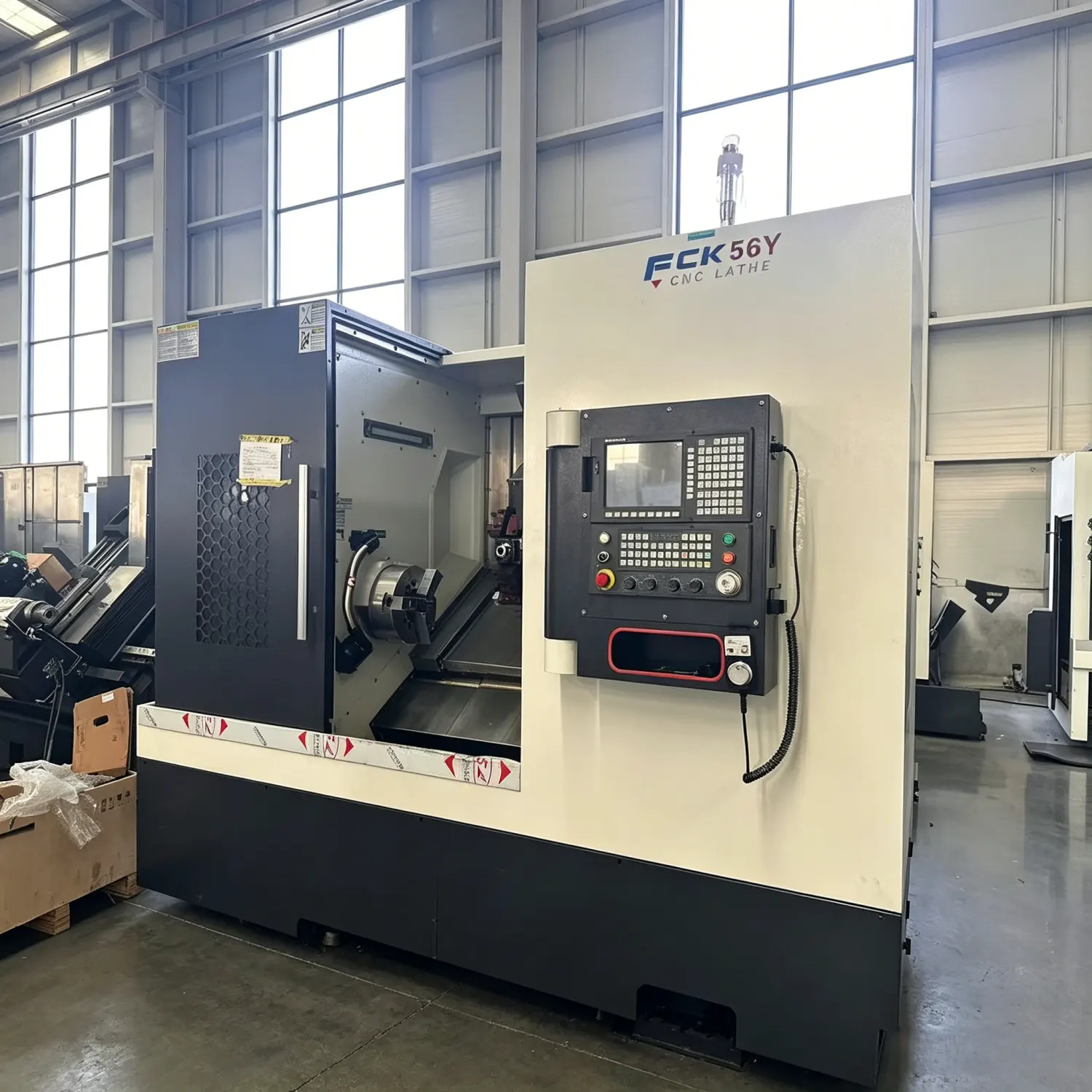
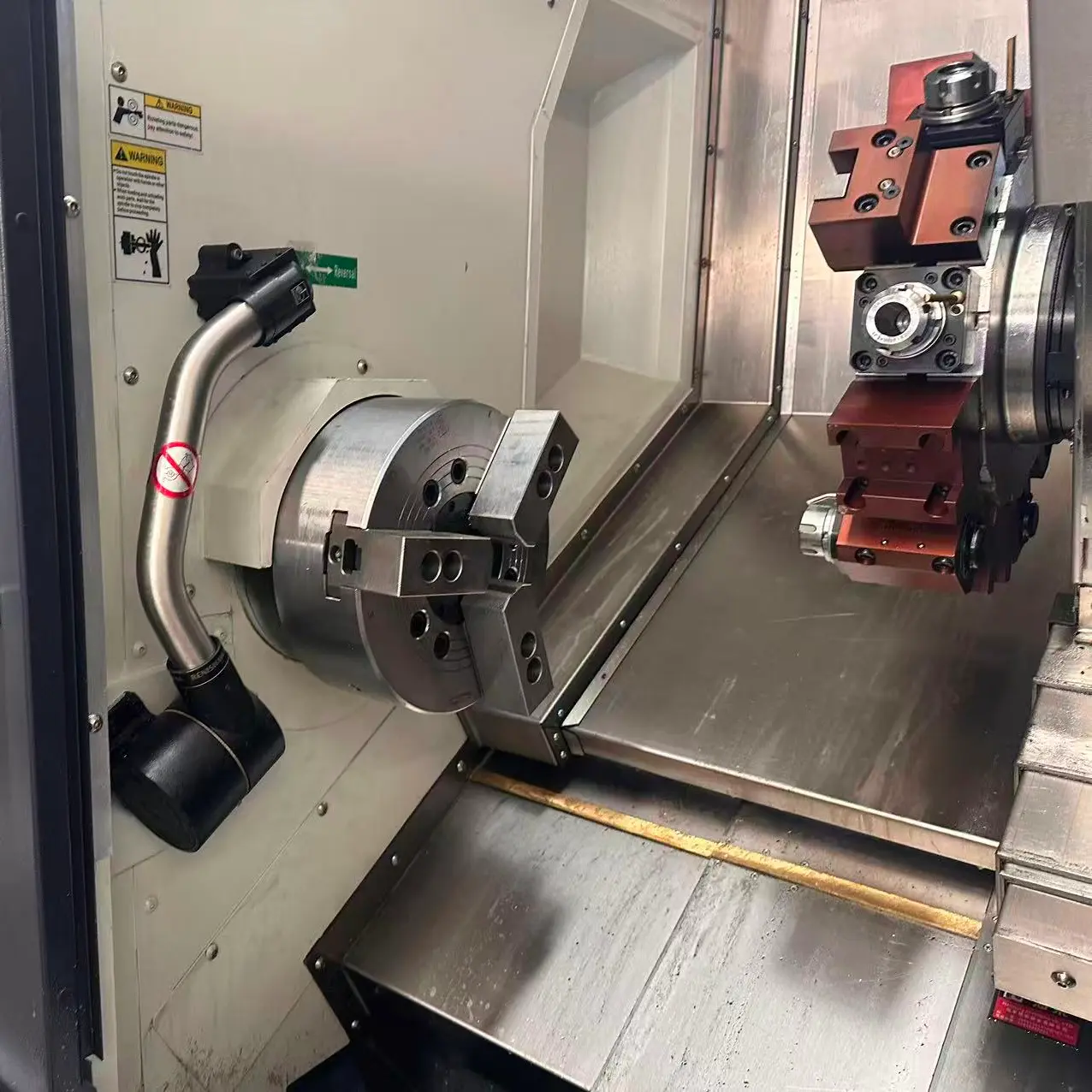
Токарный станок с ЧПУ с наклонной станиной
Изготовлено компанией RUNNEWTECH с возможностью выбора систем управления FANUC, Siemens, Mitsubishi, GSK или Syntec и питанием 380 В/50 Гц или 220 В/60 Гц для экспорта.
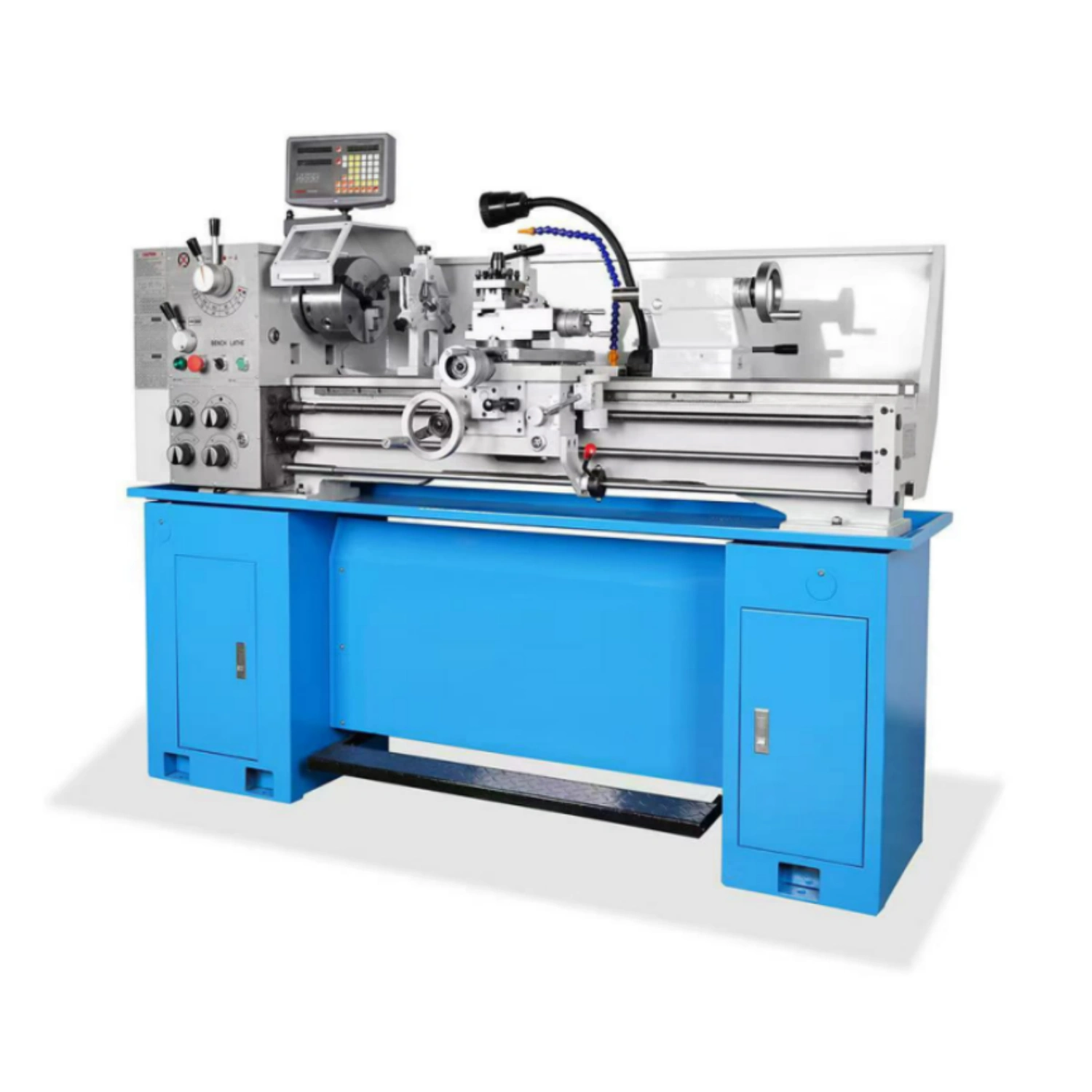
Conventional Lathe Machine
Изготовлено компанией RUNNEWTECH с возможностью выбора систем управления FANUC, Siemens, Mitsubishi, GSK или Syntec и питанием 380 В/50 Гц или 220 В/60 Гц для экспорта.

Обрабатывающий центр с ЧПУ
Изготовлено компанией RUNNEWTECH с возможностью выбора систем управления FANUC, Siemens, Mitsubishi, GSK или Syntec и питанием 380 В/50 Гц или 220 В/60 Гц для экспорта.
Часто задаваемые вопросы
Q: If I am buying my first CNC lathe, should I start with Haas or jump straight to Doosan?
Start with Haas if your spindle hours are under 2,000 annually and your tolerance band is above ±0.02 mm. The control is self-teaching, parts drop-ship from California, and used resale is liquid everywhere. Jump to Doosan if you are running production shifts and need thermal stability for mixed batch work. The Puma 2600 series holds ±0.008 mm out of the crate but demands a dealer network within flight distance; in Southeast Asia or the Middle East, confirm who stocks the BMT turret parts locally before you sign.
Q: Why does this ranking put TRUMPF above Makino when Makino builds tighter machines?
Makino does build tighter machines. The a61nx holds ±0.005 mm in die-mold work that TRUMPF verticals cannot touch. But this ranking weighs what an independent buyer can actually access and afford. TRUMPF wins on fiber laser integration, factory financing in Europe, and a single point of contact for cutting, welding, and automation. Makino’s strength is captive to Japanese domestic financing and a slower export response chain. Buy Makino for precision dies; buy TRUMPF if your shop cuts mixed sheet and tube and needs the machine this quarter.
Q: Where does a Chinese slant-bed lathe like RUNNEWTECH’s fit against Hardinge or Okuma for real production?
Hardinge and Okuma own the spindle dynamics and thermal loop; a Hardinge Conquest holds roundness under 1.5 µm for ten years with scheduled maintenance. A RUNNEWTECH slant-bed lathe with linear guideways and a GSK 980 or FANUC 0i Mate pairing will hold ±0.015 mm in continuous turning, costs roughly 40-60% less FOB, and ships in six weeks not six months. The gap is in the casting aging program and the belt-drive spindle noise floor. For medium-tolerance shaft work, hydraulic fittings, and general subcontracting, the Chinese machine earns its place; for aerospace bearing seats or medical implants, pay the premium.
Q: What is the hidden cost of buying DMG MORI or HELLER that this ranking does not capture?
The machine price is only the entry fee. DMG MORI and HELLER both require certified coolant chemistry, prescribed way-cover schedules, and annual spindle health checks that run several thousand dollars per year even if nothing breaks. HELLER’s horizontal machining centers need a pit or raised foundation that adds weeks to install. DMG MORI’s CELOS ecosystem locks some diagnostic data behind subscription tiers. Budget 15-20% of purchase price annually for keeping the warranty valid and the accuracy traceable. A Haas or a RUNNEWTECH machine will run on generic coolant and local compressed air; factor that freedom into your total cost model before you chase the badge.
Данный рейтинг отражает наше собственное мнение как компании-производителя оборудования, занимающейся экспортом, и приводится исключительно в качестве общей справочной информации.
Перечисленные компании и бренды отсортированы в соответствии с указанными выше критериями, а не на основе платного размещения. Упомянутые названия компаний и товарные знаки принадлежат их соответствующим владельцам. RUNNEWTECH является независимым производителем и не связан с какими-либо другими упомянутыми компаниями, не поддерживается ими и не является их официальным дистрибьютором. Технические характеристики, ценовые диапазоны
При этом указанные цифры, касающиеся точности, носят ориентировочный характер и подлежат письменному подтверждению в проформе-счете.
Готовы определить технические характеристики вашего следующего станка?
Компания RUNNEWTECH занимается производством металлообрабатывающего оборудования с 2010 года,
с более чем 15-летним опытом работы в сфере экспорта. Сообщите нам материал заготовки, максимальные размеры детали, требуемый допуск и пункт назначения
порт, и мы предоставим вам техническое задание и коммерческое предложение на условиях FOB или CIF в течение одного рабочего дня.

 English
  Indonesian
  Vietnamese
  Arabic
  Russian
  Spanish