
Руководство для покупателей обрабатывающих центров с ЧПУ
The right Обрабатывающий центр с ЧПУ is determined by five factors in this order: maximum workpiece envelope, material removal rate required for your hardest material, tolerance band, typical batch size, and your shop’s incoming power specification. Convert those into machine requirements before comparing brands or control systems.
This page turns each factor into a concrete specification—spindle taper, guideway type, axis travel, control system, and power supply adaptation—so you can eliminate unsuitable machines and shortlist two or three models for final negotiation.
Map Part Size to Axis Travel and Table
Measure your largest part’s length, width, and height, then add 150–200 mm clearance per axis for fixtures and tool length. A 400 × 400 mm valve body needs roughly 800 × 500 × 550 mm in X × Y × Z travel. Common vertical machining center travels cluster at 600 × 400 × 450 mm (compact), 1000 × 500 × 500 mm (mid-size), and 1300 × 600 × 600 mm (large). Table load capacity matters too: 500 kg for small parts, 1500 kg for mold bases. Match BT40 taper for parts under 15 kg tool weight; BT50 for heavier roughing or face mills over 80 mm diameter.
Match Material to Spindle Power and Torque
Aluminum and plastics need high speed, low torque: 10,000–15,000 rpm, 7.5 kW. Alloy steel and stainless need torque at lower speed: 6,000–8,000 rpm, 11–15 kW. Cast iron roughing demands 15 kW or more at 4,500 rpm with high-torque belt or direct-drive spindles. Check the spindle torque curve, not just peak power.
Select Guideways by Tolerance and Batch
Hardened box ways (HT250 or HT300 casting, hand-scraped) damp vibration for heavy interrupted cuts and hold ±0.010 mm over long cycles. Linear roller guides (HIWIN, PMI) enable 36–48 m/min rapid traverse and ±0.005 mm positioning for finishing, but wear faster under roughing loads. Repeatability: 0.003 mm for linear guides, 0.005 mm for box ways in equivalent class machines.
Control Systems and Feature Sets
FANUC 0i-MF Plus and Siemens 828D dominate export markets; both handle rigid tapping, look-ahead, and macros. Mitsubishi M80 suits shops already running Mitsubishi lathes. GSK 25i and KND 2100Ti reduce control cost 30–40% but limit post-processor compatibility and remote diagnostics. Syntec 22MA offers mid-range capability with good English support in Southeast Asian markets. Demand Ethernet, USB, and RS-232; USB 3.0 and CF card slots are becoming standard.
Power Supply and Site Preparation
Most machining centers ship at 380V 50Hz three-phase. For 220V 60Hz regions (North America, parts of South America), specify a step-up transformer or factory-configured voltage module. Machine weight ranges from 3,500 kg (compact VMC) to 12,000 kg (large double-column). Verify your floor loading: 8,000 kg/m² minimum for mid-size machines. Foundation bolts and 100 mm reinforced concrete with isolation pads prevent resonance. Unloading requires a 10-tonne forklift or 5-tonne overhead crane.
Shortlist Checklist
- [ ] Part fits with 150 mm fixture clearance in all axes
- [ ] Spindle power and rpm cover hardest material and operation
- [ ] Guideway type matches primary operation (roughing vs finishing)
- [ ] Control system compatible with existing CAM post and operator skill
- [ ] Power supply resolved: 380V 50Hz ready, or transformer quoted
- [ ] Floor loading, crane capacity, and installation space confirmed
- [ ] CE documentation, operation manual, and spare parts list included in quote
Типы и конфигурации обрабатывающих центров с ЧПУ
The right Обрабатывающий центр с ЧПУ depends on your part envelope, material, tolerance, batch size, and available power. Start with maximum part size to determine table and travel requirements. Match spindle taper and power to material removal rates. Verify positioning accuracy against tolerance bands. Confirm batch size justifies automation or tool capacity. Check your shop supply against machine voltage and compressed air needs.
| Тип или класс | Типичный рабочий диапазон | Параметры управления | Наиболее подходит для | Примечания |
|---|---|---|---|---|
| Компактный 3-осевой вертикальный станок | X/Y/Z: 600/400/450 mm to 850/520/540 mm | GSK 980MDi, KND K2000Ti, Syntec 21MA, FANUC 0i-MF | Small aluminum brackets, electronics housings, medical fixtures, training centers | 7,000–12,000 rpm direct-drive spindle, BT30 or BT40 taper, 3.7–7.5 kW, positioning accuracy ±0.005 mm, repeatability ±0.003 mm, rapid traverse 24–36 m/min, machine weight 2,500–4,000 kg, 380V 50Hz three-phase |
| Среднегабаритный 3-осевой вертикальный станок | X/Y/Z: 1,000/600/600 mm to 1,300/700/700 mm | FANUC 0i-MF Plus, Siemens 828D, Mitsubishi M80, Syntec 22MA | General job shops, automotive sub-assemblies, mold bases, agricultural castings | 8,000–15,000 rpm, BT40 or BT50, 11–18.5 kW, positioning ±0.004 mm, repeatability ±0.0025 mm, rapid traverse 36–48 m/min, weight 6,000–10,000 kg, linear roller guideways (HIWIN/PMI) or hardened box ways |
| Heavy-Duty Box Way Vertical | X/Y/Z: 1,600/800/800 mm to 2,500/900/900 mm | FANUC 0i-MF Plus, Siemens 828D, Mitsubishi M80 | Roughing steel and cast iron, large mold cavities, heavy aerospace structural parts | 6,000–10,000 rpm, BT50 only, 15–22 kW, positioning ±0.005 mm, repeatability ±0.003 mm, rapid traverse 18–30 m/min, weight 12,000–18,000 kg, HT300 or Meehanite casting, hardened box ways for rigidity |
| Горизонтальный обрабатывающий центр | X/Y/Z: 500/500/500 mm to 1,000/900/900 mm (with B-axis table) | FANUC 31i-B5, Siemens 840D sl, Mitsubishi M800 | Gearbox housings, pump bodies, valve blocks, high-volume automotive work | 6,000–12,000 rpm, BT40 or BT50, 11–30 kW, positioning ±0.003 mm, repeatability ±0.002 mm, APC pallet changer standard, weight 10,000–25,000 kg, requires pit foundation and overhead crane |
| 5-Axis Universal/Trunnion | A/C trunnion or B/C swivel head: X/Y/Z up to 1,250/800/800 mm with ±120° rotation | FANUC 31i-B5, Siemens 840D sl, Syntec 60CA | Impellers, turbine blades, orthopedic implants, complex aerospace contours | 12,000–20,000 rpm, HSK-A63 or BT40, 7.5–18.5 kW, positioning ±0.003 mm, repeatability ±0.002 mm, rapid traverse 40–60 m/min, weight 8,000–15,000 kg, requires RTCP and post-processor verification |
| Портальный/двустоечный вертикальный | X/Y/Z: 2,000/1,600/800 mm to 4,000/2,500/1,000 mm | FANUC 31i-B5, Siemens 840D sl | Large aircraft panels, wind turbine components, machine tool beds, construction equipment parts | 4,000–8,000 rpm, BT50 or ISO50, 22–37 kW, positioning ±0.008 mm, repeatability ±0.005 mm, rapid traverse 20–30 m/min, weight 35,000–80,000 kg, HT300 casting, linear roller guideways on X, box ways on Y/Z |
Компактный 3-осевой вертикальный станок
These machines dominate entry-level production and technical training. A 600 × 400 × 450 mm work envelope handles most aluminum brackets and plastic fixtures. Controls from GSK, KND, and Syntec keep capital cost down; FANUC 0i-MF adds reliability for shops running unattended shifts. The BT30 taper limits tool diameter and rigidity—fine for finishing, problematic for heavy roughing in steel. Spindle power below 7.5 kW and lower thermal mass mean temperature swings affect repeatability during long cycles. Buyers are small job shops, electronics subcontractors, and vocational schools. What it cannot do: hold tight tolerances on 4140 steel all day, or handle parts over 200 mm in Z without fixture gymnastics. Weight around 3,000 kg ships in a 20-foot container; no foundation beyond standard industrial flooring required.
Среднегабаритный 3-осевой вертикальный станок
This is the default workhorse for mixed-part job shops and automotive Tier-2 suppliers. The 1,000–1,300 mm X travel accommodates manifold plates, transmission cases, and medium mold bases. BT40 handles up to 20 mm depth-of-cut in steel; BT50 extends that to 35 mm for cast iron roughing. Linear roller guideways from HIWIN or PMI allow 48 m/min rapids and reduce stick-slip during high-speed contouring, but they wear faster than box ways under interrupted cuts—budget rail replacement every 8,000–12,000 hours in heavy conditions. Positioning accuracy in the ±0.004 mm range suits H7 bores and tight bolt patterns. Siemens 828D and FANUC 0i-MF Plus dominate here; Mitsubishi M80 suits shops already standardized on that ecosystem. Machine weight 6,000–10,000 kg needs a 3-ton forklift or 5-ton crane for unloading. These machines run on 380V 50Hz; a 220V 60Hz shop needs a 45–75 kVA step-up transformer and frequency converter.
Heavy-Duty Box Way Vertical
When the part is a 500 kg casting and the cut is 10 mm deep in normalized steel, box ways win. The sliding contact area distributes load across HT300 cast iron with hand-scraped turcite coatings. Rapid traverse caps at 30 m/min—slower than linear guides, but vibration damping is superior. These machines normally carry BT50 tapers with 15–22 kW geared or direct-drive spindles. The trade-off is acceleration and thermal growth: box ways generate more friction heat, and the larger casting mass takes longer to reach equilibrium. Mold makers and heavy equipment manufacturers buy these. What it cannot do: compete on cycle time against linear-guide machines in aluminum, or achieve the surface finish needed for optical molds without secondary operations. Foundation requirements specify 200 mm reinforced concrete with anchor bolts; machine weight 15,000 kg demands 10-ton crane capacity.
Горизонтальный обрабатывающий центр
The horizontal spindle orientation lets chips fall away from the cut zone, improving tool life and surface finish in cast iron and steel. The built-in pallet changer (APC) allows load/unload during cutting, keeping spindle utilization above 80 percent in batch production. B-axis rotary tables enable four-sided machining without reclamping—critical for hydraulic valve bodies and pump housings. Controls trend toward FANUC 31i-B5 or Siemens 840D sl for full 5-axis capability if paired with a tilting table. The downside: floor space doubles compared to an equivalent vertical machine, and the spindle sits at operator chest height—ergonomics matter for manual setups. Weight starts at 10,000 kg and climbs rapidly with tool magazine capacity (60–120 tools standard). These machines need a pit for chip conveyor clearance and an overhead crane for pallet loading. Automotive powertrain suppliers and high-volume hydraulic component makers are the primary buyers.
5-Axis Universal/Trunnion
Trunnion machines (A/C rotary table) and swivel-head designs (B/C on the spindle) eliminate multiple setups for complex geometries. A 5-axis impeller program that takes six hours with three setups on a 3-axis machine drops to 90 minutes with one setup here. RTCP (Rotated Tool Center Point) control is mandatory; without it, post-processor errors crash machines. The 12,000–20,000 rpm spindle range favors aluminum and titanium finishing over heavy steel roughing. HSK-A63 tooling improves balance at high speed but costs 40 percent more than BT40 and requires more precise tool management. Aerospace subcontractors and medical implant manufacturers buy these. What it cannot do: justify itself on prismatic parts—if 90 percent of your work is flat-sided housings, the fifth axis sits idle and the rotary table becomes a thermal error source. Machine weight 8,000–15,000 kg; foundation must isolate floor vibration to protect rotary encoder accuracy.
Портальный/двустоечный вертикальный
For parts measured in meters, not millimeters, the gantry moves the column while the table stays fixed—or the table moves in X while the gantry spans in Y. This separates cutting forces from workpiece mass, maintaining accuracy on 2,000 kg aircraft panels. Double-column designs with box ways on Y and Z, linear guides on X, bridge the gap between rigidity and speed. Spindle speeds run low (4,000–8,000 rpm) with high torque (22–37 kW) for hogging out large volumes. Positioning accuracy relaxes to ±0.008 mm—tight enough for assembly interfaces, not for precision bearing bores without additional finishing. Wind turbine manufacturers, machine tool builders, and construction equipment makers buy these. What it cannot do: fit in standard factory bays; ceiling height needs 5 meters minimum for crane clearance, and floor loading exceeds 15 tons per square meter. Shipping requires flat-rack containers or break-bulk; installation spans two weeks with factory technician support.
Selection Checklist
Before requesting quotation, verify:
- Part envelope: Maximum length, width, height, plus 150 mm clearance for fixtures and tool length
- Material: Aluminum below 12 mm depth-of-cut → compact or mid-size vertical; steel castings over 50 kg → box way or horizontal
- Tolerance: IT7 or tighter → verify positioning accuracy and specify linear scale feedback on X/Y/Z
- Batch size: Under 50 pieces → manual loading acceptable; over 500 pieces → demand APC and robotic interface
- Power supply: 380V 50Hz standard; 220V 60Hz regions require transformer sizing at 1.5× machine rated power for inrush current
Price guidance by class, FOB China port: compact 3-axis USD 25,000–45,000; mid-size 3-axis USD 55,000–95,000; heavy-duty box way USD 85,000–140,000; horizontal with APC USD 120,000–220,000; 5-axis trunnion USD 150,000–280,000; gantry/double-column USD 200,000–500,000 depending on span.

Технические характеристики и как их понимать
| Параметр | Начальный уровень | Средний ценовой диапазон | Высокие технические характеристики |
|---|---|---|---|
| X/Y/Z Travel (mm) | 600 / 400 / 450 | 1000 / 600 / 600 | 1300 / 700 / 700 |
| Размер стола (мм) | 400 × 700 | 600 × 1200 | 700 × 1400 |
| Max Load on Table (kg) | 300 | 800 | 1500 |
| Конус шпинделя | BT40 | BT40 | BT50 |
| Spindle Speed (rpm) | 8,000 | 12,000 | 15,000 |
| Мощность шпинделя (кВт) | 5.5 | 11 | 18.5 |
| Rapid Traverse X/Y/Z (m/min) | 30 / 30 / 24 | 48 / 48 / 36 | 60 / 60 / 48 |
| Cutting Feed Rate (m/min) | 10 | 20 | 30 |
| Точность позиционирования (мм) | ±0,010 | ±0,008 | ±0,005 |
| Повторяемость (мм) | ±0,006 | ±0,004 | ±0,003 |
| Вместимость журнала для инструментов | 16 | 24 | 30 |
| Время смены инструмента (от стружки до стружки, сек.) | 6 | 4 | 2.5 |
| Система управления | GSK 218MC or KND K2000MC | Mitsubishi M80 или Syntec 22MA | FANUC 0i-MF Plus или Siemens 828D |
| Тип направляющей | Hardened box way (X/Y), box way (Z) | Линейная роликовая направляющая (HIWIN/PMI) | Linear roller guide with scale feedback |
| Напряжение питания | 380 В, 3 фазы, 50 Гц | 380 В, 3 фазы, 50 Гц | 380 В, 3 фазы, 50 Гц |
| Общая подключенная нагрузка (кВА) | 15 | 25 | 40 |
| Вес оборудования нетто (кг) | 3,200 | 6,500 | 10,500 |
| Площадь пола: Д × Ш × В (мм) | 2,200 × 1,800 × 2,300 | 3,400 × 2,600 × 2,800 | 4,200 × 3,200 × 3,100 |
How to Read the Specification Sheet Line by Line
Working Range or Travels (X/Y/Z) — These numbers define the rectangular box inside which the spindle center can reach every point. X is the longest axis (table left-right), Y is saddle front-back, Z is spindle head up-down. A 600/400/450 mm machine handles smartphone molds and small automotive brackets. A 1300/700/700 mm machine covers engine blocks and large industrial valves. Measure your largest part, then add 150–200 mm clearance on each axis for fixtures and tool length.
Table Size and Max Load — The table must physically hold your fixture plus the heaviest workpiece without overhanging beyond the cast iron edges. Overhang causes chatter and accelerated guideway wear. A 300 kg limit sounds generous until you bolt on a 180 kg tombstone fixture with two 80 kg castings—now you have 40 kg margin, not 400.
Spindle Taper: BT40 versus BT50 — BT40 handles tools up to ~25 mm diameter in steel at moderate depths. BT50 doubles the gripping force and mass, mandatory for 50 mm face mills, long roughing end mills, and heavy interrupted cuts in cast iron. BT50 machines cost 20–30% more and consume more power. Do not specify BT50 for light aluminum work; the spindle mass hurts acceleration and fine finishing.
Скорость вращения шпинделя и мощность — 8,000 rpm suffices for steel, cast iron, and most stainless. 12,000–15,000 rpm becomes necessary for small-diameter aluminum cutters (high surface speed demand) and fine finishing with ball-nose end mills. Power curves matter: an 11 kW spindle may deliver only 7.5 kW at 3,000 rpm. Check the continuous duty rating, not the 30-minute peak.
Скорость перемещения и скорость подачи — Rapids (G00) move the axes between cuts; higher numbers reduce non-cutting time on large parts with many holes. Feed rate is the maximum during actual cutting. A mid-range machine at 48 m/min rapid cuts positioning time roughly in half versus entry level at 30 m/min. For high-mix, low-volume shops, this matters less than for production automotive runs.
Точность и повторяемость позиционирования — Positioning accuracy (±0.010 mm entry level) is where the machine thinks it is versus where it actually is. Repeatability (±0.006 mm entry level) is how consistently it returns to the same point. Repeatability governs your ability to swap fixtures mid-batch and resume without re-indicating. Tight-tolerance aerospace work demands ±0.005 mm positioning and ±0.003 mm repeatability with linear scale feedback; general job shop work runs comfortably at ±0.008/±0.004 mm.
Журнал «Tool»: Производительность и время смены инструмента — 16 tools covers 80% of three-axis work if you plan tool grouping. 24 tools lets you leave drills, taps, and roughing/finishing sets mounted permanently. Chip-to-chip time under 4 seconds becomes critical when your program calls 200+ tool changes per shift. Slower changers force batching by tool, increasing WIP and handling.
Система управления — FANUC and Siemens dominate export markets for a reason: global spare parts availability, operator familiarity, and post-processor compatibility. Mitsubishi M80 and Syntec 22MA offer comparable motion control at lower cost; GSK and KND reduce initial outlay further but narrow your pool of local service technicians outside China. For training centers, FANUC or Siemens align with industry hiring expectations.
Тип направляющей — Hardened box ways (Turcite-B coated, scraped to 8–10 points per 25×25 mm) damp vibration in heavy roughing and tolerate chip contamination better. Linear roller guides (HIWIN HG series or PMI MSA series) enable higher rapid speeds and lower friction but require cleaner coolant and more frequent seal inspection. Cast iron box way machines weigh 30–40% more for the same travel; that mass stabilizes chatter-prone setups.
Напряжение питания и подключенная нагрузка — Chinese-built machines ship at 380V 50Hz. Buyers in 220V 60Hz regions (North America, parts of Japan, Taiwan) need a step-up transformer rated 1.25× the connected load to handle inrush current. A 25 kVA machine needs a 32 kVA transformer minimum. Voltage fluctuation beyond ±10% degrades servo performance and risks drive faults.
Вес оборудования без упаковки и занимаемая площадь — Heavier machines (HT300 casting, stress-relieved, sometimes Meehanite-grade in Japanese-designed models) resist cutting forces with less deflection. A 6,500 kg mid-range machine versus a 4,200 kg competitor at identical travels usually indicates thicker walls, wider box ways, or more conservative design. Floor space includes chip conveyor, operator platform, and tool loading clearance; add 1 meter on all sides for maintenance access.
Matching Your Part to the Machine
Material drives spindle power and torque curve. Aluminum 6061 at 300 m/min surface speed needs rpm more than kW. 4140 steel at 80 m/min needs torque at low rpm; verify the spindle delivers 70+ Nm below 2,000 rpm. Inconel and titanium demand rigid box ways, through-spindle coolant (20+ bar), and conservative speeds—specify the machine for the worst material you run, not the easiest.
Maximum part size sets minimum travels. A 500 mm long manifold needs 650 mm X travel with fixture overhang. A 400 mm diameter flange on a rotary table needs Y travel of 550 mm minimum to clear the table edge. Draw your part envelope, add fixture height to Z clearance, then verify against the spec sheet.
Tolerance converts to machine grade. General ±0.05 mm tolerances run on entry-level box way machines with ballscrews. ±0.01 mm positional tolerances need mid-range linear guides and thermal compensation. ±0.005 mm or true position callouts require linear scales, cooled ballscrews, and controlled shop environment (20±2°C).
Batch size changes magazine and automation priority. Lots of 10–50 pieces favor quick setup over tool count; a 16-tool magazine with fast manual loading wins. Lots of 500+ pieces justify 30 tools, robotic pallet loading, and 2.5 second tool changes. Calculate spindle utilization: if your current machine sits 40% of the time loading and measuring, automation pays back in 18–24 months at typical Southeast Asian labor rates.
Shop power supply determines transformer budget. A 380V 50Hz machine on 220V 60Hz needs transformer ($2,000–5,000 depending on kVA), potential phase converter, and sometimes a chiller re-specification. Factor this into total landed cost before comparing FOB prices.
Условия торговли и экспортная документация
FOB (сдача на борт) — Seller delivers machine to port, clears export customs, and loads onto vessel. Buyer pays ocean freight, insurance, and import clearance. FOB Chinese port is standard for machining centers; it lets you control freight forwarding and insurance terms.
CIF (стоимость, страхование, фрахт) — Seller arranges and pays freight to named destination port plus marine insurance. Risk transfers at loading port, same as FOB, so CIF is not “delivered” despite the inclusive price. Verify insurance covers replacement value, not just generic cargo terms.
CFR (стоимость и фрахт) — Identical to CIF minus insurance. Buyer arranges coverage. Rare in machine tool trade; most buyers lack marine insurance relationships.
EXW (Ex Works) — Buyer collects from factory door, handles all export clearance and loading. Only viable if you have a China-based logistics agent. Not recommended for first-time importers.
Payment Terms: T/T versus L/C — T/T (telegraphic transfer) 30% deposit, 70% before shipment is standard for established relationships. L/C (letter of credit) adds bank fees (0.15–0.3% of value) but protects against non-delivery; required by some procurement departments and government tenders. Confirm L/C terms match production lead time—typically 45–60 days for standard build, 90 days for custom configurations.
HS Code 8457.10 — Machining centers for working metal. Used for customs declaration, duty calculation, and certificate of origin. Verify your country’s tariff schedule; ASEAN-China FTA and RCEP may reduce duty versus MFN rates.
Маркировка CE — Required for EU destination. Chinese manufacturers obtain CE through notified body assessment or self-declaration for Annex IV machines. Request the EC declaration of conformity and technical file summary. CE is not a quality mark; it confirms conformity to Machinery Directive 2006/42/EC, EMC, and Low Voltage Directive.
Упаковочный лист и сертификат происхождения — Packing list details gross/net weight, dimensions, and contents per crate (typically base machine, chip conveyor, tool box, manual, spare parts). Certificate of origin (CO) from CCIC or local CIQ enables FTA preferential rates. For container loading, a 1000×600 mm mid-range machine fits one unit in a 40′ HQ with disassembled chip conveyor and enclosure panels. Two entry-level 600×400 mm machines may fit in one 40′ HQ if crated separately.
Установка и разгрузка — A 6,500 kg machine needs 10-tonne capacity forklift or crane with 4-meter reach. Floor loading exceeds 5 tonnes/m²; reinforced concrete 200 mm minimum, leveled to 0.1 mm/m with epoxy grout. Vibration isolation pads for machines near stamping presses or overhead cranes.
Shortlist Checklist
- [ ] Largest part envelope + 200 mm fixture clearance fits within X/Y/Z travels
- [ ] Heaviest workpiece + fixture under 80% of table load limit
- [ ] Worst-case material’s required torque available at working rpm
- [ ] Control system matches operator skill and local service availability
- [ ] Guideway type aligns with material (box way for heavy steel, linear for aluminum speed)
- [ ] Tool magazine covers one complete part’s tool list without mid-run manual loading
- [ ] Voltage compatibility verified; transformer budget included if needed
- [ ] Floor loading and crane/forklift capacity confirmed
- [ ] CE documentation requested and reviewed (EU buyers)
- [ ] Spare parts list includes ballscrews, servo motors, amplifier modules, and prox switches
Price ranges at FOB Chinese port: entry level $28,000–42,000; mid range $55,000–85,000; high specification $110,000–180,000 depending on control brand, linear scales, and automation options.

Цена обрабатывающего центра с ЧПУ и факторы, влияющие на нее
| Класс | Типичный рабочий диапазон или мощность | Пример элемента управления или источника | Ориентировочная стоимость на условиях ФОБ в долларах США |
|---|---|---|---|
| Entry-level VMC 3-axis | 650 × 400 × 500 mm travel, BT40, 7.5 kW | GSK 980MDc or KND K2000Ti | 28,000 – 42,000 |
| Mid-range VMC 3-axis | 850 × 520 × 540 mm travel, BT40, 11 kW | Mitsubishi M80 или Syntec 22MA | 45,000 – 68,000 |
| Heavy-duty VMC 3-axis | 1100 × 600 × 600 mm travel, BT50, 15 kW | FANUC 0i-MF Plus или Siemens 828D | 72,000 – 110,000 |
| Entry-level 5-axis | 500 mm rotary table, 8 kW, trunnion | Syntec 60WA or GSK 25i | 55,000 – 85,000 |
| Mid-range 5-axis | 630 mm table, 12 kW, integrated B/C | FANUC 31i-B5 или Siemens 840D sl | 95,000 – 155,000 |
| Gantry/Double-column | 2000+ mm X, BT50, 22 kW | Siemens 828D or Mitsubishi M800 | 140,000 – 280,000 |
These bands exclude destination costs and assume standard 380V 50Hz supply with CE documentation. A 220V 60Hz transformer adds roughly USD 1,200–2,800 depending on machine power draw.
Decision Framework: From Your Part to Machine Specification
Match five part characteristics to machine requirements in sequence.
Material and cutting load
– Aluminum and mild steel: BT40 taper, 7.5–11 kW spindle, 8,000–12,000 rpm standard
– Stainless, tool steel, or titanium: BT50 taper, 15–22 kW, torque-optimized spindle at 6,000–10,000 rpm
– Cast iron or heavy roughing: Hardened box ways preferred over linear roller guides for damping; HT300 or Meehanite casting minimum
Maximum part size
– Add 150–200 mm clearance to each axis beyond your largest envelope for fixture and tool length
– A 400 mm part in X needs roughly 600 mm table travel minimum; a 650 mm machine handles this with margin
Tolerance requirement
– ±0.05 mm general machining: positioning accuracy 0.02 mm, repeatability 0.01 mm sufficient
– ±0.01 mm precision work: demand 0.008 mm positioning, 0.005 mm repeatability, typically requires linear scales and thermal compensation
– 5-axis simultaneous contouring: rotary axis positioning 0.001° class, which pushes control system tier upward
Batch size and changeover frequency
– 10–100 pieces, frequent setups: 24-tool ATC minimum, arm-type changer under 3.5 seconds tool-to-tool
– 500+ pieces, dedicated fixtures: 30–40 tool capacity, pallet changer worth the premium for 15–20% throughput gain
Shop power supply
– 380V 50Hz three-phase: standard, no modification
– 220V 60Hz or 415V 50Hz: requires transformer and often control parameter adjustment; verify servo motor compatibility before ordering
Real Cost Structure of a Chinese-Source CNC Machining Center
A mid-range VMC at USD 55,000 FOB Shanghai breaks down approximately as follows at factory gate:
| Cost Component | Share of FOB | Примечания |
|---|---|---|
| Casting/frame and base | 12–16% | HT250 vs HT300 accounts for 3–4% swing; stress-relief cycle adds 2% |
| Направляющие и шариковые винты | 8–12% | HIWIN/PMI linear guides vs unbranded; C3 vs C5 grade screws |
| Узел шпинделя | 10–14% | Belt-driven vs direct-drive; ceramic bearings for high speed |
| Система управления и сервоприводы | 18–25% | FANUC or Siemens at top; GSK/KND at lower bound |
| Устройство смены инструмента и магазин | 6–9% | Arm-type vs turret; tool capacity |
| Electrical cabinet and ancillaries | 7–10% | Includes coolant, chip conveyor, enclosure |
| Монтажные работы и испытания | 5–7% | Laser alignment, ball bar test, 48-hour run-off |
| Factory margin | 8–12% | Varies by volume and dealer channel |
| Export packing (sea-worthy) | 2–3% | Vacuum-sealed, desiccant, plywood crate |
| Внутренние грузоперевозки до порта | 1–2% | Shanghai/Tianjin/Qingdao |
Post-FOB additions:
– Sea freight to Southeast Asia/Middle East: USD 1,500–3,500 depending on machine weight and container type
– Insurance (110% CIF value): 0.3–0.5%
– Destination duty and VAT: 5–25% depending on HS code 8457.10 and local regime
– Customs clearance and port handling: USD 800–2,000
The control system brand and—on laser-equipped machines—the laser source brand are normally the two single biggest line items. A FANUC 0i-MF Plus with αi series servos and motors can exceed USD 12,000 against USD 4,500 for a comparable GSK package. That gap alone explains much of the price spread between machines with otherwise identical castings and travels.
Почему самое дешёвое предложение оказывается ещё дешевле
Three specification reductions drive low bids without obvious disclosure:
- Lighter casting: A 650 mm travel machine at 3,200 kg net weight versus 4,100 kg for the same envelope indicates thinner walls, lower rib density, or HT250 instead of HT300. Rigidity under heavy cuts suffers; chatter appears at 60–70% of the heavier machine’s metal removal rate
- Lower-grade ball screw: C5 grade (0.023 mm/300 mm positioning deviation) installed where C3 (0.008 mm) is expected; tolerance capability drops one class without immediate failure
- Unbranded or “OEM” spindle: No named bearing manufacturer, no published taper runout specification; thermal growth and bearing life become uncontrolled variables
These reductions rarely appear in quotations. Request net weight, ball screw grade, and spindle bearing brand explicitly for comparison.
Сравнение эксплуатационных расходов за пять лет
Assume two 850 mm travel VMCs: Machine A at USD 42,000 FOB with GSK control, Machine B at USD 62,000 FOB with FANUC 0i-MF Plus. Both running 2,000 hours/year, 85% utilization.
| Статья расходов | Machine A (Lower Spec) | Machine B (Higher Spec) |
|---|---|---|
| Annual power consumption (35 kVA avg draw) | 59,500 kWh × USD 0.10 = USD 5,950 | 56,000 kWh × USD 0.10 = USD 5,600 |
| Tooling and inserts | USD 4,200 | USD 4,200 |
| Coolant and maintenance fluids | USD 1,800 | USD 1,800 |
| Predicted annual downtime (control/servo related) | 45 hours | 12 hours |
| Downtime cost at USD 85/hour lost margin | USD 3,825 | USD 1,020 |
| Spare parts reserve (ball screws, bearings, seals) | USD 2,400/year | USD 1,600/year |
| Year 1–5 total excluding purchase | USD 59,875 | USD 46,100 |
The USD 20,000 initial gap narrows to roughly break-even by Year 3 and reverses thereafter. This assumes stable parts and operator training; if your local FANUC technician is 800 km away and GSK support is domestic, recalculate travel time into downtime figures.
Shortlist Checklist
Before final specification, verify:
- [ ] Part envelope plus 200 mm clearance fits within stated X/Y/Z travels
- [ ] Spindle taper and power match material removal rate requirements; BT50 for heavy, BT40 for general
- [ ] Control system brand and servo motor series named in quotation, not “or equivalent”
- [ ] Positioning accuracy and repeatability stated in mm, not “high precision”
- [ ] Net weight compared to competitive machines of same travel; lighter demands explanation
- [ ] Ball screw grade C3 or C5 specified; guideway brand named (HIWIN, PMI, or hardened box way)
- [ ] Power supply compatibility confirmed; transformer cost included if needed
- [ ] Tool capacity and changer type match batch size and variety
- [ ] CE documentation, not just sticker, available for customs clearance
- [ ] Foundation drawing and lifting plan provided; crane or forklift capacity at destination confirmed
Price is a range, not a quotation. The right machine costs what your part tolerance, material, and annual hours demand—no more, and critically, no less.
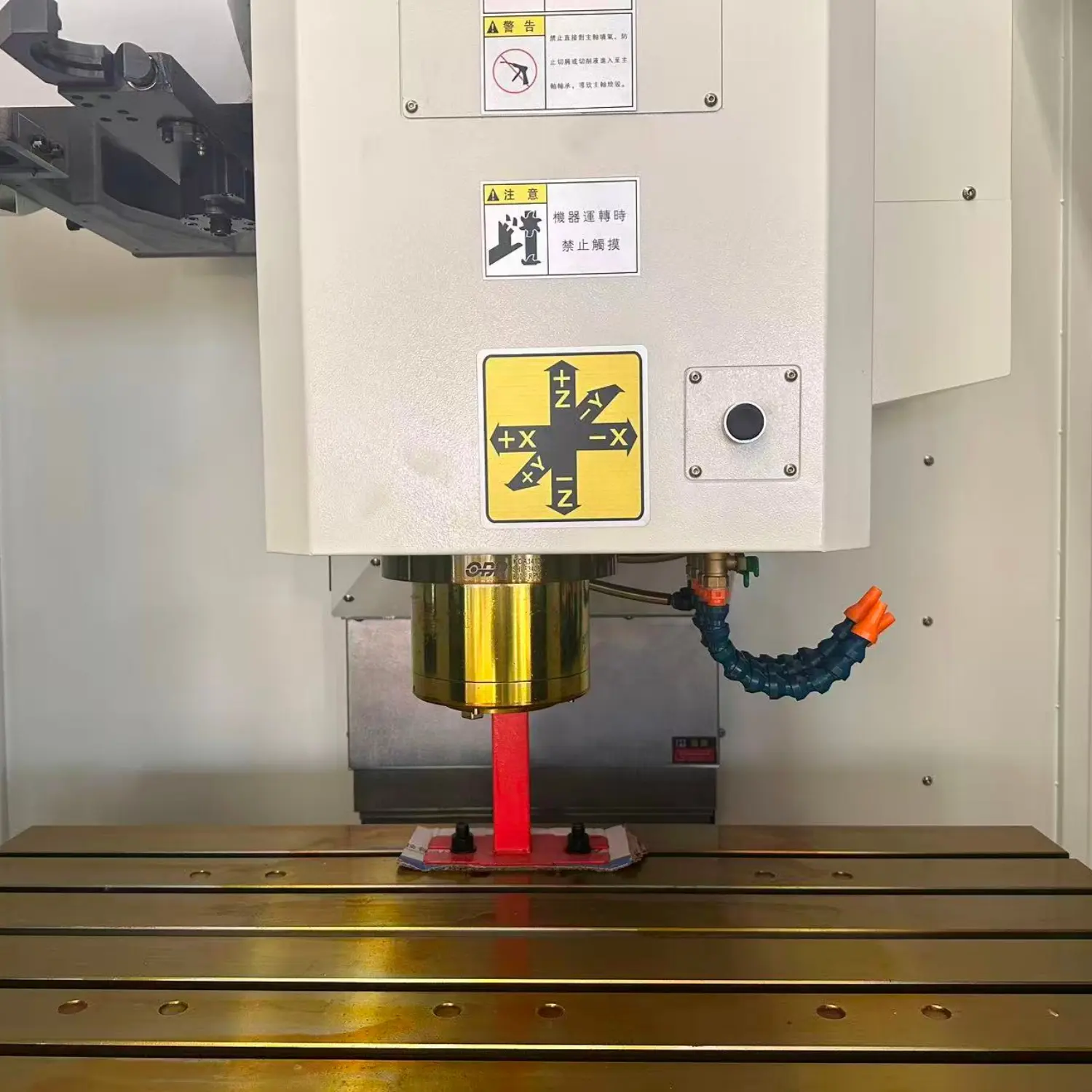
Отраслевые области применения обрабатывающих центров с ЧПУ
A CNC machining center is specified by matching the machine’s mechanical limits and motion control capabilities to the worst-case part in your current or planned production mix. The decision framework below converts five shop-level variables into concrete specification thresholds.
| Decision Input | Specification Requirement | Typical Range |
|---|---|---|
| Material | Spindle power (kW), torque (Nm), BT40 vs BT50 taper, through-spindle coolant pressure | Aluminum/steel: 7.5–11 kW; hardened steel/titanium: 15–22 kW, BT50 |
| Maximum part size | X/Y/Z travel (mm), table load (kg), max workpiece height | 500×400×450 mm for small parts; 1300×700×700 mm for automotive blocks |
| Tolerance | Positioning accuracy / repeatability (mm), thermal compensation, control system grade | ±0.005 mm / ±0.003 mm for general; ±0.003 mm / ±0.002 mm for die/mould |
| Batch size | Tool magazine capacity, pallet changer, rapid traverse (m/min), chip-to-chip time | 24–32 tools for medium batches; 60+ tools with pallet changer for unmanned |
| Shop power supply | Transformer sizing, voltage/frequency match, peak current draw | 380V 50Hz standard; 220V 60Hz regions need 25–30% oversized transformer |
Price ranges for new vertical machining centers from Chinese manufacture: USD 35,000–65,000 for entry-level 3-axis BT40 machines with GSK or KND controls; USD 65,000–120,000 for mid-range machines with FANUC 0i-MF Plus, linear roller guides, and 10,000–12,000 rpm direct-drive spindles; USD 120,000–220,000 for heavy-duty BT50 machines with box ways, geared head spindles, and full enclosure with chip conveyor.
Automotive And Motorcycle Parts
| Сектор | Типичные изготавливаемые детали | Рекомендуемые технические характеристики | Почему эта машина подходит |
|---|---|---|---|
| Automotive and motorcycle parts | Cylinder heads, transmission cases, brake caliper mounts, connecting rods, wheel hubs | X/Y/Z: 1100–1600/600–800/600–700 mm; BT50 taper; 15–18.5 kW spindle at 6000–8000 rpm; positioning ±0.005 mm; FANUC or Mitsubishi control; 24-tool magazine; rapid traverse 30–48 m/min | High metal removal rates in cast aluminum and ductile iron; BT50 handles heavy interrupted cuts; large travels accommodate engine block fixtures |
Automotive production runs demand metal removal efficiency over finishing finesse. A 600 mm Z travel clears tall cylinder head fixtures, while BT50 taper and 18.5 kW spindle power maintain 4–6 mm depth of cut in cast iron at feeds above 800 mm/min. Positioning accuracy of ±0.005 mm is sufficient for most automotive tolerances; chasing ±0.003 mm adds cost without improving part function. For motorcycle parts—smaller castings and machined billet components—a BT40 machine with 7.5–11 kW spindle and 8000–10,000 rpm better matches the part scale. Through-spindle coolant at 20 bar minimum is non-negotiable for deep-hole drilling in brake caliper hydraulic passages.
Сельскохозяйственная техника
| Сектор | Типичные изготавливаемые детали | Рекомендуемые технические характеристики | Почему эта машина подходит |
|---|---|---|---|
| Agricultural machinery | Gearbox housings, hydraulic lift arms, pivot pins, bearing blocks, flanges | X/Y/Z: 1300/700/650 mm minimum; BT50; 11–15 kW geared head spindle 2000–6000 rpm; hardened box ways; positioning ±0.008 mm; GSK or Syntec control acceptable | Box ways absorb shock loads from cast iron scale and sand inclusions; lower rpm/high torque suits large-diameter boring |
Agricultural castings arrive rough and heavy. Hardened box ways on HT300 or Meehanite castings withstand the impact of interrupted cuts through sand pockets and chilled iron surfaces where linear guides would brinell. A 15 kW geared head spindle delivering 800–1200 Nm at 800–1500 rpm bores 80–120 mm diameter bearing seats in single passes. The trade-off: rapid traverse drops to 15–24 m/min versus 36–48 m/min on linear guide machines, and positioning accuracy loosens to ±0.008 mm—acceptable for functional agricultural tolerances. Machine weight runs 8500–12,000 kg; foundation bolts and 150 mm reinforced concrete eliminate vibration during heavy cuts.
Hydraulic And Pneumatic Fittings
| Сектор | Типичные изготавливаемые детали | Рекомендуемые технические характеристики | Почему эта машина подходит |
|---|---|---|---|
| Hydraulic and pneumatic fittings | Manifold blocks, valve bodies, cartridge housings, bulkhead connectors, banjo fittings | X/Y/Z: 600/400/450 mm; BT40; 7.5–11 kW spindle 10,000–12,000 rpm; positioning ±0.003 mm, repeatability ±0.002 mm; FANUC 0i-MF or Siemens 828D; 16–24 tools | Tight tolerances on intersecting drilled passages; high spindle speed for small-diameter threading and porting |
Hydraulic manifolds require positional accuracy on cross-drilled passages: a 0.1 mm deviation misaligns O-ring seats and causes leaks. Specify ±0.003 mm positioning with ±0.002 mm repeatability, verified with laser interferometer rather than assumed from catalog data. BT40 taper at 10,000–12,000 rpm enables small-diameter tapping and thread milling in stainless steel without excessive torque that snaps taps. Through-spindle coolant and high-pressure pump (50–70 bar) flush chips from deep intersecting holes. Batch sizes of 200–2000 pieces favor 24-tool magazines with sister tooling to minimize changeover. Machine footprint stays compact: 2800 × 2400 mm floor space, 4500–5500 kg net weight.
Oil And Gas Couplings
| Сектор | Типичные изготавливаемые детали | Рекомендуемые технические характеристики | Почему эта машина подходит |
|---|---|---|---|
| Oil and gas couplings | API threaded connectors, crossover subs, valve bonnets, frac heads, wellhead components | X/Y/Z: 1000/600/600 mm; BT50; 15–22 kW spindle 3000–6000 rpm; positioning ±0.005 mm; full enclosure with chip conveyor; 32-tool magazine; thermal compensation | Heavy wall thicknesses in alloy steel and Inconel; API thread forms require rigid setup and sustained torque |
Oilfield couplings in 4130, 4140, and Inconel 718 demand torque headroom. A 22 kW spindle with two-speed geared head delivers 1200–2000 Nm at 500–1500 rpm for turning-threading combo operations or for heavy roughing prior to finish passes. Thermal compensation—either software-based or with temperature sensors on spindle and ballscrews—prevents growth during 30–60 minute thread milling cycles that would otherwise drift API gage tolerances. BT50 taper with power drawbar rated 25 kN minimum resists pull-out during heavy interrupted threading. Machine weight exceeds 10,000 kg; unloading requires 10-tonne forklift or overhead crane with 6 m hook height.
Mould And Die Work
| Сектор | Типичные изготавливаемые детали | Рекомендуемые технические характеристики | Почему эта машина подходит |
|---|---|---|---|
| Mould and die work | Injection mould cavities, blow mould inserts, stamping dies, forging die impressions, extrusion dies | X/Y/Z: 800–1200/600–800/500–700 mm; BT40 or HSK-A63; 11–15 kW spindle 10,000–15,000 rpm; positioning ±0.003 mm, repeatability ±0.002 mm; linear roller guides (HIWIN/PMI); FANUC 31i-B or Siemens 828D; rigid tapping; 3D machining package | Surface finish and contour accuracy dominate; linear guides enable smooth micro-movements for 3D surfacing |
Mould finishing is where linear roller guides prove their value over box ways. HIWIN or PMI linear guides with C3 grade ballscrews enable programmed feedrates of 2–5 mm/min without stick-slip, producing Ra 0.4–0.8 µm surfaces directly from machining. HSK-A63 taper (or BT40 with balanced holders above 10,000 rpm) reduces runout for ball-end finishing. The control system matters: FANUC 31i-B or Siemens 828D with Advanced Surface and 5-axis option (if needed) interpolates complex parting lines without visible faceting. Thermal stability is critical—specify spindle chiller and machine enclosure with temperature control to ±1°C. Sacrifice metal removal rate: these machines run 30–50% lighter cuts than production machines, and the 15,000 rpm spindle is unsuitable for heavy roughing in tool steel. Separate roughing and finishing operations, or accept longer cycle times.
Центры технической подготовки
| Сектор | Типичные изготавливаемые детали | Рекомендуемые технические характеристики | Почему эта машина подходит |
|---|---|---|---|
| Technical training centres | Curriculum parts: stepped shafts, prismatic test pieces, threaded components, basic 3D contours | X/Y/Z: 600/400/450 mm; BT40; 5.5–7.5 kW spindle 8000 rpm; positioning ±0.005 mm; GSK 980MDC or KND K1000Ti; open-frame or semi-enclosure; Ethernet for DNC; 16-tool magazine; rapid traverse 24 m/min | Low acquisition cost; control matches regional industrial prevalence; robust enough for student errors; visible mechanics for instruction |
Training centers prioritize control familiarity over metal removal. GSK 980MDC or KND K1000Ti controls dominate Chinese and Southeast Asian shop floors; students trained on FANUC or Siemens migrate easily, but reverse training creates friction. Specify semi-enclosure with interlocked doors—visible spindle and tool changes reinforce learning, while chip guards contain the mess of incorrect feeds. A 7.5 kW spindle tolerates crashed tools; keep a stock of pull studs and tool holders. Positioning accuracy of ±0.005 mm validates student workpieces without premium control cost. Machine weight 3200–4000 kg allows standard forklift unloading; 380V 50Hz supply with 20 kVA capacity suffices. Budget USD 28,000–42,000 for this specification range.
Shortlist Checklist
Before requesting quotations, confirm:
- [ ] Worst-case part dimensions fit within 80% of stated X/Y/Z travels (fixture and clamping consume 15–20%)
- [ ] Spindle power at intended rpm exceeds calculated cutting power by 30% minimum
- [ ] Taper matches: BT40 for ≤20 mm tools and light cuts; BT50 for ≥25 mm tools or heavy roughing
- [ ] Control system matches regional technician skill base and existing shop programs
- [ ] Power supply: transformer rated for machine peak current plus 25% if voltage/frequency conversion needed
- [ ] Foundation: 150 mm reinforced concrete for machines >6000 kg; vibration isolation pads for precision work
- [ ] Unloading equipment: forklift capacity ≥1.5× machine net weight, or overhead crane with ≥4 m reach
- [ ] Spare parts: local distributor for spindle bearings, ballscrews, and control system components; 2-year minimum parts availability commitment in contract
Пошаговое руководство по заказу и импорту
The three mistakes that most often leave a delivered CNC machining center sitting idle are easy to prevent. Wrong supply voltage or frequency—fix by confirming your shop runs 380V 50Hz three-phase or 220V 60Hz three-phase before wiring, and budget for a step-down or step-up transformer plus phase converter if needed. Рабочая зона слишком мала для данной детали—fix by measuring your largest part including fixture height and adding 150 mm clearance in Z and 100 mm in X/Y before selecting travels. No electrical schematic, parameter backup, or local consumable source—fix by requiring hardcopy and USB backup of all parameters, schematics in English, and a written list of local distributors for spindle bearings, tool holders, and control system parts before signing the purchase order.
Define the Workpiece Envelope and Tolerance
Start with the part, not the machine. Measure your largest existing job plus the tallest fixture or fourth-axis rotary table you plan to add.
| Технические характеристики | Typical Range | What It Determines |
|---|---|---|
| X travel | 600–1500 mm | Part length plus fixture |
| Y travel | 400–700 mm | Part width plus vise overhang |
| Z travel | 500–800 mm | Part height plus tool length plus clearance |
| Размер таблицы | 400×800 mm to 700×1600 mm | Workholding footprint |
| Max load on table | 500–2000 kg | Whether you need a pallet changer |
Add 20% headroom on all axes for future work. A 600 mm X travel machine cannot handle a 580 mm part in practice—tool length, fixture ears, and chip clearance consume space.
Tolerance drives the control loop. Positioning accuracy of ±0.005 mm and repeatability of ±0.003 mm suit general job shop work. For mold cavities or tight bearing bores, demand ±0.003 mm positioning and ±0.002 mm repeatability, which requires linear roller guideways (HIWIN or PMI), ballscrew pitch error compensation, and often a 0.001 mm scale feedback system rather than motor encoder alone.
Batch size matters for spindle taper and magazine capacity. BT40 handles up to 16 mm tools at 8000–12000 rpm; BT50 handles 32 mm roughing tools and heavy milling at 6000–8000 rpm. A 24-tool arm-type magazine suffices for families of 10–15 parts. Mixed job shops need 30–40 tools.
Choose the Control System and Service Path
| Управление | Strengths | Вопросы, связанные с обслуживанием |
|---|---|---|
| FANUC 0i-MF Plus | Global parts network, proven reliability | Local distributor required for parameter backups and ladder logic edits |
| Siemens 828D | Strong in Europe, excellent 5-axis kinematics | Needs Siemens-trained technician for PLC faults |
| Mitsubishi M80 | Common in Southeast Asian automotive plants | Parts availability strong in ASEAN, weaker in Africa |
| GSK 25i / KND 2100Ti | Lower initial cost, Chinese-language support | English documentation varies; confirm G-code compatibility with your CAM post |
| Syntec 22MA | Good value for 3+2 and rotary table work | Smaller global footprint; insist on remote VPN support capability |
Match the control to who can service it within 48 hours of a breakdown. A FANUC machine in a country with no FANUC distributor is a risk. A GSK machine with a local dealer who stocks servo motors and drives is often the lower-risk choice for remote regions.
Confirm Electrical Supply and Transformer Needs
| Shop Supply | Machine Requirement | Solution |
|---|---|---|
| 380V 50Hz three-phase | 380V 50Hz three-phase | Direct connection |
| 220V 60Hz three-phase (North America) | 380V 50Hz or 220V 60Hz | Step-up transformer to 380V, or order machine built for 220V 60Hz |
| 415V 50Hz three-phase (India, parts of Africa) | 380V 50Hz | Step-down transformer or tap change at factory |
| Single-phase only | Three-phase required | Rotary phase converter or VFD—adds cost and complexity |
Request the manufacturer confirm: rated voltage ±10%, frequency ±5%, and total connected load in kVA. A typical 850 mm travel vertical machining center draws 25–35 kVA. Transformer sizing: machine kVA × 1.25 for inrush current. A 30 kVA machine needs a 40 kVA minimum transformer.
Check Floor Loading Foundation and Floor Space
Machine weight and dynamic loads determine foundation requirements.
| Machine Size | Net Weight | Floor Space (L×W×H) | Foundation |
|---|---|---|---|
| Compact VMC, 600×400 mm travel | 3500–4500 kg | 2500×2200×2600 mm | 150 mm reinforced concrete, 5000 kg/m² floor loading |
| Mid-size VMC, 850×500 mm travel | 5500–7500 kg | 3000×2600×2800 mm | 200 mm reinforced concrete with rebar mesh, isolated pad if near vibration sources |
| Large VMC, 1300×700 mm travel | 9000–12000 kg | 4500×3200×3200 mm | 250 mm isolated foundation with anchor bolts, 8000 kg/m² |
Ceiling height: machine height plus 500 mm for crane clearance, plus 1000 mm if overhead crane operates. A 2800 mm tall machine needs 4300 mm minimum ceiling in crane bays.
Floor loading includes chip conveyor, coolant tank (800–1500 kg full), and pallet systems. Budget 1.5× machine weight for total static load.
Confirm Conformity Marking for Customs
CE marking is required for customs clearance in European Union countries and increasingly accepted as proof of safety compliance in Middle Eastern and African markets. Request the EC Declaration of Conformity and the technical file reference number. For non-EU destinations, confirm whether local customs accepts CE or requires GOST-R (EAEU), SASO (Saudi Arabia), or SONCAP (Nigeria). Do not assume—customs rejection costs demurrage at $100–300 per day.
Compare FOB versus CIF
| Срок | Сумма оплаты | Чем занимается поставщик | Risk Point |
|---|---|---|---|
| FOB китайский порт | Machine cost + loading + inland to port | Export clearance, loading onto vessel | You arrange and pay ocean freight, insurance, destination clearance |
| Порт назначения по условиям CIF | Machine cost + freight + insurance to port | All of above | You pay unloading, destination charges, customs; insurance coverage limits may not cover total loss |
FOB saves 3–5% on small machines if you have freight forwarder relationships. CIF is simpler for first-time importers. Neither includes unloading from container or installation.
Container Type and Machine Weight Limits
| Machine Weight | Container | Loading Method | Constraint |
|---|---|---|---|
| Under 21,500 kg | 40′ HQ standard | Forklift or ramp | Floor loading limit 28,000 kg distributed |
| 21,500–28,000 kg | 40′ HQ with reinforced floor | Crane from open-top or flat rack | Requires booking special equipment; adds $800–1500 |
| Over 28,000 kg or over-width | Flat rack or breakbulk | Port crane | Higher freight cost, longer transit; secure lashing certification required |
Machines over 2500 mm width do not fit in standard containers. A 1300 mm travel VMC with full enclosure typically ships at 2800 mm width—confirm dismantling of enclosure panels or order flat rack.
Условия внесения залога и оплаты остатка
Standard structure: 30% deposit with order, 70% balance before shipment. For machines over $80,000, negotiate: 30% deposit, 60% after factory acceptance test (FAT) and before shipment, 10% after successful installation and runoff at your facility. This ties final payment to performance verification.
Приемочные испытания на заводе перед окончательной оплатой
Attend FAT or assign third-party inspector. Minimum FAT checklist:
- Geometric accuracy per ISO 10791 or JIS B 6336—squareness of axes, spindle runout, table flatness
- Positioning and repeatability with laser interferometer—record actual values, not pass/fail
- Spindle thermal growth test—30 minute warmup, measure Z drift
- Cutting test—aluminum or steel sample part matching your typical material
- Full tool change cycle—measure chip-to-chip time, verify all magazine positions
- Leak test—coolant system, hydraulic lines, pneumatic lines
- Documentation—electrical schematic, pneumatic diagram, parameter list, operation manual
Withhold balance until FAT report is accepted in writing. Photograph machine serial number plate and controller software version during FAT.
Разгрузочное оборудование в пункте назначения
| Machine Weight | Minimum Equipment | Alternative |
|---|---|---|
| Under 5000 kg | 5-ton forklift with 1800 mm forks | None practical |
| 5000–10,000 kg | 10-ton forklift or 8-ton telehandler | Roll-off trailer with hydraulic tail |
| 10,000–20,000 kg | 25-ton mobile crane | Two 10-ton forklifts in tandem—requires certified rigging plan |
| Over 20,000 kg | 50-ton crane or heavy-lift trailer | Port crane if delivered to industrial quay |
Confirm unloading surface: compacted gravel or concrete, level within 1°. Soft ground with a 7500 kg machine on a rollback truck creates tipping risk.
Монтаж и обучение персонала
Foundation cure time: 28 days for reinforced concrete if new pour. Machine placement: 500 mm minimum clearance on operator side, 800 mm on service side for chip conveyor and electrical cabinet access.
Leveling: precision level 0.02 mm/m, checked in two axes. Anchor and grout after 48 hours of monitoring for foundation settlement.
Training structure: 5 days minimum—2 days operator (program loading, tool setting, work offsets, daily maintenance), 2 days maintenance (lubrication intervals, ballscrew inspection, spindle bearing monitoring, alarm diagnosis), 1 day CAM post verification with your actual programs. Demand training in your language or provide interpreter. Record all training on video for turnover to future operators.
Начальный комплект запасных частей и расходных материалов
Order with machine, not after arrival. Lead times from China for control parts are 2–4 weeks; local downtime costs more.
| Category | Items | Количество |
|---|---|---|
| Tooling | BT40 or BT50 tool holders | 12–20 pieces |
| Pull studs | 10 pieces | |
| Collet chucks or hydraulic chucks | 4–6 pieces | |
| Шпиндель | Spindle bearings (matched set) | 1 комплект |
| Spindle belt or direct drive coupling | 1 | |
| Electrical | Control fuse kit | 1 complete set |
| Servo motor encoder batteries | 4 | |
| I/O module relays | 10 | |
| Pneumatic/hydraulic | Filter regulator elements | 6 |
| Coolant pump mechanical seal | 2 | |
| Consumables | Way oil ISO VG68 | 60 liters |
| Hydraulic oil ISO VG46 | 40 liters | |
| Cutting coolant concentrate | 200 liters |
Request part numbers cross-referenced to local distributor equivalents. A “spindle bearing” without manufacturer part number cannot be sourced locally.
Shortlist Checklist
Before signing purchase order, verify:
- Workpiece envelope with 20% clearance: X_ mm, Y_ mm, Z____ mm
- Tolerance requirement drives linear guideway and feedback scale: yes/no
- Control system: _, local service within 48 hours: yes/no, contact name: _
- Shop voltage/phase/frequency: _, matches machine: yes/no, transformer needed: yes/no, size: _ кВА
- Floor loading capacity: _ kg/m², foundation thickness: _ mm, floor space: _ m², ceiling height: _ мм
- Customs conformity marking required: _, CE documentation requested: yes/no
- Shipping term: FOB/CIF, container type: _, estimated machine weight: _ кг
- Payment: deposit _%, balance _%, FAT before final payment: yes/no
- FAT attendance or third-party inspector assigned: yes/no
- Unloading equipment booked: _ ton capacity, type: _
- Installation: foundation cure time available, leveling equipment ready, training dates set
- Spare parts package ordered with machine: yes/no, local cross-reference part numbers received: yes/no
Соответствующее оборудование RUNNEWTECH

Обрабатывающий центр с ЧПУ
Обработочный центр с ЧПУ напрямую с завода с возможностью выбора систем управления FANUC, Siemens, Mitsubishi, GSK или Syntec и питанием 380 В/50 Гц или 220 В/60 Гц для экспорта.
Часто задаваемые вопросы об обрабатывающих центрах с ЧПУ
Q: What is the minimum order quantity for a CNC machining center?
One unit is standard for container-loaded machines such as a VMC850 with 850 × 500 × 500 mm travels. For compact training-center models like a VMC640, we can ship two units in a 40 HQ container to split freight. OEM badge or custom paint starts at five units.
Q: Which control systems are available and what interface languages are supported?
FANUC 0i-MF Plus, Siemens 828D, Mitsubishi M80, GSK 25i, KND 2100Ti, and Syntec 22MA are standard options. All except GSK and KND offer full English, Spanish, German, and Russian; GSK and KND provide English and Chinese. Parameter manuals and ladder diagrams ship on USB with the machine.
Q: What is the typical lead time from deposit to ready-for-shipment?
Standard VMC models with FANUC or Siemens controls: 35–45 days. GSK or KND builds: 25–30 days. Custom spindle configurations, such as BT50 taper with 8000 rpm and 15 kW motor, add 10–15 days. Peak season (March–May) extends by one week.
Q: What are the payment terms and are they negotiable for repeat buyers?
30 percent T/T deposit, 70 percent L/C at sight or T/T before shipment for first orders. Repeat buyers with two completed transactions qualify for 20/80 terms. Orders above 150,000 USD can be structured with 15 percent deposit and phased payments tied to production milestones.
Q: Can the machine run on our local power supply and what adaptations are needed?
Standard build is 380V 50Hz three-phase. For 220V 60Hz regions (Mexico, parts of Southeast Asia), we fit a step-up transformer inside the electrical cabinet or ship an external 75 kVA transformer. Specify your nominal voltage and phase configuration at order; retrofitting in the field costs roughly 800–1200 USD plus local electrician fees.
Q: What shipping method container type and transit time apply?
VMC850 and smaller machines ship in 40 HQ containers; one machine per container due to 6500–8500 kg net weight and required bracing. Larger models such as VMC1160 or gantry types move by flat-rack or breakbulk. Sea transit: 18–25 days to Southeast Asian ports, 30–40 days to Middle East, 35–45 days to East Africa or South America East Coast.
Q: What warranty coverage and spare parts support is provided?
Twelve months from bill of lading date covering mechanical and electrical components except consumables. Spare parts kit includes belt, proximity switches, fuses, and grease cartridges. FANUC and Siemens parts ship from regional service hubs; GSK and KND parts direct from factory with 5–7 day DHL turnaround. Extended warranty to 24 months available at 4 percent of machine value.
Вопрос: Предоставляются ли протокол заводских приемочных испытаний и отчет о точности?
Yes. Every machine undergoes ballbar test and laser interferometer verification per ISO 230-2. Report includes positioning accuracy (typically ±0.008 mm for linear roller guide machines, ±0.010 mm for box way) and repeatability (±0.005 mm). Video of test cut and report PDF are sent before final payment; original hardcopy ships with machine documents.
How to Choose a CNC Machining Center
Match the machine to your part, not the brochure. Start with five variables.
Material determines spindle torque and taper. Aluminum at high volume needs BT40, 10000–12000 rpm, 7.5 kW. Steel and stainless steel need BT40 or BT50 at 6000–8000 rpm with higher torque; BT50 handles 20 mm depth-of-cut roughing in 45# steel without chatter. Cast iron and hardened molds favor box way construction over linear guides for damping.
Maximum part size sets travel and table. A 400 × 300 × 250 mm automotive bracket fits a VMC640 with 650 × 400 × 450 mm travels. A 600 mm long hydraulic manifold needs VMC850 or VMC1060 with 1000–1100 mm X travel. Add 100 mm clearance on all axes for fixture and tool length.
Tolerance drives guide way and control choice. ±0.05 mm general machining: GSK or KND on linear guides is sufficient. ±0.02 mm for die work or hydraulic valve bodies: FANUC or Siemens with linear roller guides (HIWIN or PMI), thermal compensation, and 0.005 mm repeatability. ±0.01 mm or better: specify direct-scale feedback and temperature-controlled factory floor; the control matters less than environmental stability.
Batch size changes automation and tool capacity. Under 50 pieces: 16-tool armless changer is adequate. 200+ pieces or families of parts: 24-tool arm-type ATC and fourth-axis rotary table interface. Night unmanned running needs chip conveyor, through-spindle coolant, and tool breakage detection; budget 15–20 percent above base machine.
Shop power supply constrains model selection. A VMC850 with 11 kW spindle and 7.5 kW servo draw peaks at 35 kVA. Verify your transformer headroom; running at 80 percent capacity causes voltage sag and positioning alarm. 220V 60Hz shops must size the step-up transformer at 1.5× calculated load, not 1.0×.
Shortlist Checklist
- [ ] Part material and typical hardness: _____
- [ ] Largest envelope (L × W × H): _____ mm
- [ ] Tightest tolerance required: _____ mm
- [ ] Batch size and annual volume: _____
- [ ] Available floor space (L × W × H): _____ m
- [ ] Power supply (V/Hz/phase): __ with ____ kVA spare capacity
- [ ] Budget range (FOB China): 18000–28000 USD for VMC640–850 with GSK/KND; 32000–55000 USD with FANUC/Siemens and linear guides
Price reflects control cost gap (FANUC 0i-MF Plus adds roughly 4500 USD over GSK 25i), guide type (linear roller 800–1200 USD premium over box way), and ATC capacity. Do not pay for 12000 rpm if your parts never exceed 3000 rpm; the bearing set is different and replacement cost doubles.
Важное уведомление
Технические характеристики, показатели точности и ценовые диапазоны, приведенные в данном руководстве, носят ориентировочный характер и приведены для целей планирования
только в этих целях. Фактический рабочий диапазон, достижимый допуск, доступность системы управления, требования к напряжению питания и соответствие
Маркировка зависит от модели и страны назначения. Покупатели должны самостоятельно уточнить напряжение и частоту в своей электросети, нагрузку на пол и
фундамент, разгрузочное оборудование и требования к импорту перед размещением заказа. Все цифры подлежат письменному подтверждению в
окончательный проформа-счёт, выставленный компанией RUNNEWTECH.
Закупка обрабатывающего центра с ЧПУ у компании RUNNEWTECH
What RUNNEWTECH Delivers
Runlongjia Machinery, founded in 2010, has shipped machines to over 80 countries through its export brand RUNNEWTECH. The CNC machining center line spans vertical and horizontal configurations with BT40 and BT50 spindle tapers, travels from 600 × 400 × 450 mm up to 2000 × 600 × 700 mm, and spindle power from 5.5 kW to 15 kW at 8,000–12,000 rpm. Control options include FANUC, Siemens, Mitsubishi, GSK, KND and Syntec. Machines are adapted to your supply voltage—380V 50Hz or 220V 60Hz with transformer where needed—and run-in for 48 hours with factory acceptance testing before packing in plywood cases with VCI rust protection.
Export Support and After-Sales
Quotes are FOB or CIF. Container loading accounts for machine weight, from 3,500 kg on smaller VMCs to 14,000 kg on larger models, with 20-foot or 40-foot flat-rack options for oversize units. CE documentation accompanies EU-bound shipments. Installation guidance, operator training materials, remote commissioning support and spare parts kits are standard. Foundation drawings specify anchor bolt patterns and levelling tolerances; unloading requires forklift or crane capacity matching 1.5× machine net weight.
Request Your Specification Match
Send your workpiece material, maximum part dimensions, required tolerance and destination port to receive a quotation within 24 hours via email or the contact form at runnewtech.com.
Получите предложение напрямую от производителя на обработку на станке с ЧПУ
Компания RUNNEWTECH занимается производством металлообрабатывающего оборудования с 2010 года,
с более чем 15-летним опытом работы в сфере экспорта. Оборудование поставляется с системой управления по вашему выбору, адаптированной к вашим требованиям
напряжение и частота; перед упаковкой изделия проходят обкатку и заводские приемочные испытания. Сообщите нам материал заготовки, максимальные размеры детали,
Укажите требуемый допуск и порт назначения, и мы предоставим вам коммерческое предложение в течение 24 часов.

 English
  Indonesian
  Vietnamese
  Arabic
  Russian
  Spanish